Gelegar kemerdekaan baru saja kita nikmati. Perayaan dimana-mana sungguh menyiratkan sebuah bangsa dan sedang bergembira dan berbahagia menikmati arti kemerdekaan. Pun kemerdekaan juga mempunyai arti yang berbeda bagi setiap orang. Sungguh sayang, ternyata kemerdekaan tidak berarti merdeka dari kelangkaan barang kebutuhan pokok seperti minyak tanah dan minyak goreng akhir-akhir ini.
Sudah 2 hari ini minyak tanah menghilang dari pasaran, termasuk dari lingkungan tempat saya tinggal. Alhasil dari segelintir kios yang masih menyediakan minyak tanah, harganya sudah melambung Rp 5 ribu dari harga normal hanya Rp 2.600,- (harga naik 100%!!). Dalam banyak pemberitaan, kelangkaan ini terkait dengan program konversi BBM ke gas.
Saya tidak berpretensi mengatakan konversi minyak tanah ke gas itu buruk. Akan tetapi jika menganggap kesuksesan program ini hanya diukur dengan jumlah tabung gas yang diserap oleh pasar, itu adalah satu kesalahan. Dalam ekonomi, barang subsititusi adalah barang yang saling menggantikan karena utilitas yang diperoleh kurang lebih sama, seperti halnya minyak tanah dan gas. Yang terjadi ketika minyak tanah langka adalah orang mencari sumber energi alternatif seperti kayu bakar, tenaga matahari, briket batubara, gas LPG. Kayu bakar untuk konteks Jakarta sudah sulit diketemukan; apalagi tenaga matahari membutuhkan transfer teknologi tinggi; briket ketersediaannya masih dipertanyakan; termasuk pula gas LPG yang dalam program konversi ini disediakan dalam ukuran yang lebih kecil yaitu 3kg.
Selain persoalan distribusi dan ketersediaan infrastruktur pendukung program konversi gas, daya beli masyarakat khususnya menengah ke bawah harus menjadi perhatian. Salah satu alasan menggunakan minyak tanah adalah bisa membeli sampai eceran terkecil walaupun dari sisi harga ditanggung lebih tinggi. Saat ini gas yang tersedia hanya tabung 15kg dan baru-baru ini saja ada tabung ukuran 3kg, apa mungkin kita membeli gas 1kg saja? Ini problem lain dari sisi produksi dan biaya investasinya.
Pada masyarakat yang berada pada level transisi, pemilihan minyak tanah atau gas mereka cenderung indiferen. Artinya jika mereka saat ini masih setia dengan minyak tanah setiap saat mereka bisa melakukan konversi ke gas, dan masalah biaya konversi bukan lagi soal. Dalam program konversi sesungguhnya merekalah yang layak jadi target karena pada kelas masyarakat ini subsidi minyak sudah jelas salah sasaran.
Untuk konversi gas, saya melihat masih ada cara lain seperti pipanisasi gas ke lingkungan perumahan (Yang saya tahu sudah ada di lokasi tertentu di Bogor dan Surabaya). Secara finansial, konsumsi gas akhirnya memang jauh lebih murah dan untuk investor, target konsumen yang cukup besar akan menurunkan biaya produksi per unitnya. Dari sisi feasibility, langkah ini lebih baik dan mencakup area yang lebih luas serta cocok juga untuk masyarakat menengah ke bawah. Bandingkan dengan pemakaian tabung gas yang (1) mahal; (2) tersedia ukuran tertentu saja; (3) tentu saja hanya menguntungkan pabrik pembuat tabung.
baca juga beberapa alasan kenapa saya (belum) memakai gas.
Showing posts with label public goods. Show all posts
Showing posts with label public goods. Show all posts
Sunday, August 19, 2007


Tuesday, April 24, 2007
Air pollution: an agenda for cleaner energy
Commemorating the earth day on 22nd of April, Minister of Environment announced a ban new cars production (here) to reduce air pollution in the big cities. It sounds sensible with the fact that population of car has been increasing over 12% per year. As a result, cars in the roads has exceeding the current carrying capacity of existing roads. Regarding to the target, this minister' proposal would be ineffective. Why?
Any minister even president can't do much in terms of stopping car production besides Indonesia is not car producer instead we assemble imported car domestically, some of them are completely build up (CBU). Let imagine that minister can persuade the companies not to sell cars to Indonesia, as soon as the companies will flee to other neighbouring countries just to find softer businesss environment' regulations. Unemployment would rise adding up to current 12,7 million jobless population (here)
Now, if you can't find any new car in the market, where do you go? 2nd hand market or maybe black market. Although the 2nd hand market gives you better price, it will be slightly higher than before. You may find good car but you have to be aware that only few of them has good quality in terms of latest technology to reduce emission. In situation where less choice available, you would end up with affordable car wether or not it has proper technology for emission reduction. Emission technology would not be your first priority to buy car. So, moratorium of car production is not really as green as it looks.
Clean energy is a global agenda, and it would not be solved only with reducing car production. Instead it should be integrated with other agenda such as providing more conservation area in the cities. It has to be put as part of spatial plan which regulate and enforce the application of emission stadard. Lastly, economic incentive such as tax reduction or tax burden would encourage or discourage people to comply.
Any minister even president can't do much in terms of stopping car production besides Indonesia is not car producer instead we assemble imported car domestically, some of them are completely build up (CBU). Let imagine that minister can persuade the companies not to sell cars to Indonesia, as soon as the companies will flee to other neighbouring countries just to find softer businesss environment' regulations. Unemployment would rise adding up to current 12,7 million jobless population (here)
Now, if you can't find any new car in the market, where do you go? 2nd hand market or maybe black market. Although the 2nd hand market gives you better price, it will be slightly higher than before. You may find good car but you have to be aware that only few of them has good quality in terms of latest technology to reduce emission. In situation where less choice available, you would end up with affordable car wether or not it has proper technology for emission reduction. Emission technology would not be your first priority to buy car. So, moratorium of car production is not really as green as it looks.
Clean energy is a global agenda, and it would not be solved only with reducing car production. Instead it should be integrated with other agenda such as providing more conservation area in the cities. It has to be put as part of spatial plan which regulate and enforce the application of emission stadard. Lastly, economic incentive such as tax reduction or tax burden would encourage or discourage people to comply.
Saturday, February 25, 2006
Tragedy of The Commons: Downloading Movie
by Alief
Salah satu hal yang paling kami (Norway's Folks, saya+kak dewa) banggakan di student housing NULS adalah fasilitas internet 24 jam, 7 hari seminggu, 10 Mbps di kamar masing-masing. Semua jadi indah karena hampir semua bisa kita dapatkan di dunia maya ini. Dari mengunduh jurnal - jurnal yang dilanggan oleh kampus, sampai dengan tindakan - tindakan ilegal khas negara berkembang, mengunduh lagu, majalah dalam format pdf dan yang paling menyenangkan FILM baru. Pernah suatu masa kak Dewa dengan bangga bercerita, di kala Star Wars paling baru belum tayang perdana, dia sudah asyiknya menonton hasil mengunduh di internet. Saya rasakan kegembiraan itu juga akhirnya disini, semua film baru, sebut apa saja, mulai Harry Potter-Goblet of Fire, The Chronicles of Narnia, sampai terakhir Munich, kami tonton dengan kualitas DVD dengan cara yang sama.
Tentu, kami bayar sewa bulanan flat yang termasuk di dalamnya fasilitas internet tanpa batas ini. Dan sebagai orang timur yang suka berbagi kebahagiaan, kadang kala saya membagi informasi cara mengunduh ini kepada teman - teman flat satu gedung. Saya mengira informasi ini layak dibagi karena dia adalah public goods. Suatu kebodohan, karena saya baru menyadari bahwa informasi ini berada di posisi common goods.
Ekonom mengelompokkan barang berdasarkan sifat rivalry dan excludability (mungkin ada yang bisa menemukan padanan kata yang tepat di bahasa Indonesia?). Jika ia secara bersamaan rivalry dan excludability, ia adalah private goods. Jika ia bersamaan non rivalry dan non excludability dia jadi public goods (contoh:TNI, Polisi). Yang sumir diantaranya sedikit rumit: rivalry saja tapi non excludable disebut common goods (contoh: SDA), dan excludability saja-non rivalry disebut club goods (contoh: klub). Awam, seringkali club goods dan common goods dimasukkan ke dalam public goods.
Kembali ke cerita, informasi tentang film gratis ini mengundang banyak orang untuk ikut bergabung dan memaksimalkan konsumsi. Beban jaringan gedung makin lama makin besar, dan bulan ini jaringan harus putus beberapa kali karena overload. Ekonom percaya there is no free lunch, sesuatu yang nyaris gratis ternyata harus dibayar dalam bentuk lain, dalam hal ini jaringan yang putus dan, untuk saya pribadi, kesal luar biasa karena saya berasa jadi ekonom paling bodoh sedunia.
Namun pengalaman saya adalah hal kecil dibanding tragedi kemanusiaan dalam Tragedy of Easter Island yang mengilhami paper terkenal Tragedy of the Commons. Keterbatasan sumber daya alam, populasi yang meningkat, dan kesalahan memposisikan sumber daya alam dalam perekonomian membuat penduduk satu pulau punah setelah sebelumnya terjadi kanibalisme untuk bertahan hidup.
Ah, saya baru sadar arti mimpi saya beberapa hari ini. Ada orang tak henti - hentinya mentertawakan saya. Mungkin dia Thomas Robert Malthus...
The Political Economy of Venice Carnival
by Berly
 My first knowledge about Venice was from Donal Duck comics from childhood time. It is suppose to be a place where a romantic couple (even though Daisy Duck could be annoying some times) leaving a masked carnival to get into a gondola slowly moving in the canals while listening to the gondolier (yes, it’s how they are called) singing o’ sole mio.
So it is quite a disappointment to visit Venice and find the gondolier are not singing (by the way, you’ll need 50 euro for a ride) and gondola is just an over-glorified canoe/getek.
But the masked carnival is way underrated. Since my university organized a daytrip, I went there last week for the opening of the carnival.
Amidst all the captivating sights and hurly-burly of thousands of exuberance tourist, this extravagant carnival is a resulted from proper response to market failure.
 Imagine your city has a long history of certain activity that can be re-enacted and bring tons of tourists (read: profit) but some money is needed to organize the festival. Those elaborate costumes, artist performances and massive stage do not come for free. Since the cost of organizing the festival is much less than the benefit from tourist then wouldn’t each citizen of the city (assuming all will benefit, quite true in the case of Venice) will hurry to contribute right?
Wrong! The benefit of carnival is felt to all through higher sales of handicraft gallery, souvenir shop, restaurant, etc (which Venice are full of) but each is better of if a carnival is set up without they are paying for it. Why not let others pay and just sit down waiting for the tourists to come?
This is a classic case of public good where the voluntary free market will not provide the best solution since the money collected will be below the optimal level. A public good is a something that once already set up (ex: bridge) can not limit the use only for those who pay for it (hence, free rider). The free rider problem is so severe that even neo-classic school (the poster boy of economics) is admitting it, albeit putting the topic in obscure last pages used to be skip by lectures catching deadline on covering more “important” topics.

Here is a description from the official website
“The Carnival of Venice officially began in 1296, when the Senate of the Republic authorized the carnival with an edict declaring the day before Lent as a day of celebration. After a break of almost two centuries, the traditions of the carnival were recovered by the Municipality in 1980 and since then the event has been held with great success each year”
So, it takes a government to start it all. There is roughly two ways to deal with public good, either to make it totally private or totally public. The government (except when under occupation, Venice always been a republic with elected government) has the coercive power to issue taxes and gather the needed money to cover the cost of carnival. Mancur Olson (The Logic of Collective Action) and Amartya Sen (Hunger and Public Action) have pointed out the possible divergence between private and public actions long time a go.
 Another interesting feature of this carnival is the theme, which is “The Dragon and The Lion”. The Winged Lion is the symbol of Venice. The Dragon? You guess it right. It’s for China. Even a 710 years old tradition can not ignore the newly awakened economic power of middle kingdom.
Enjoy the weekend.. It’s carnival time… La dolce vita!
 My first knowledge about Venice was from Donal Duck comics from childhood time. It is suppose to be a place where a romantic couple (even though Daisy Duck could be annoying some times) leaving a masked carnival to get into a gondola slowly moving in the canals while listening to the gondolier (yes, it’s how they are called) singing o’ sole mio.
So it is quite a disappointment to visit Venice and find the gondolier are not singing (by the way, you’ll need 50 euro for a ride) and gondola is just an over-glorified canoe/getek.
But the masked carnival is way underrated. Since my university organized a daytrip, I went there last week for the opening of the carnival.
Amidst all the captivating sights and hurly-burly of thousands of exuberance tourist, this extravagant carnival is a resulted from proper response to market failure.
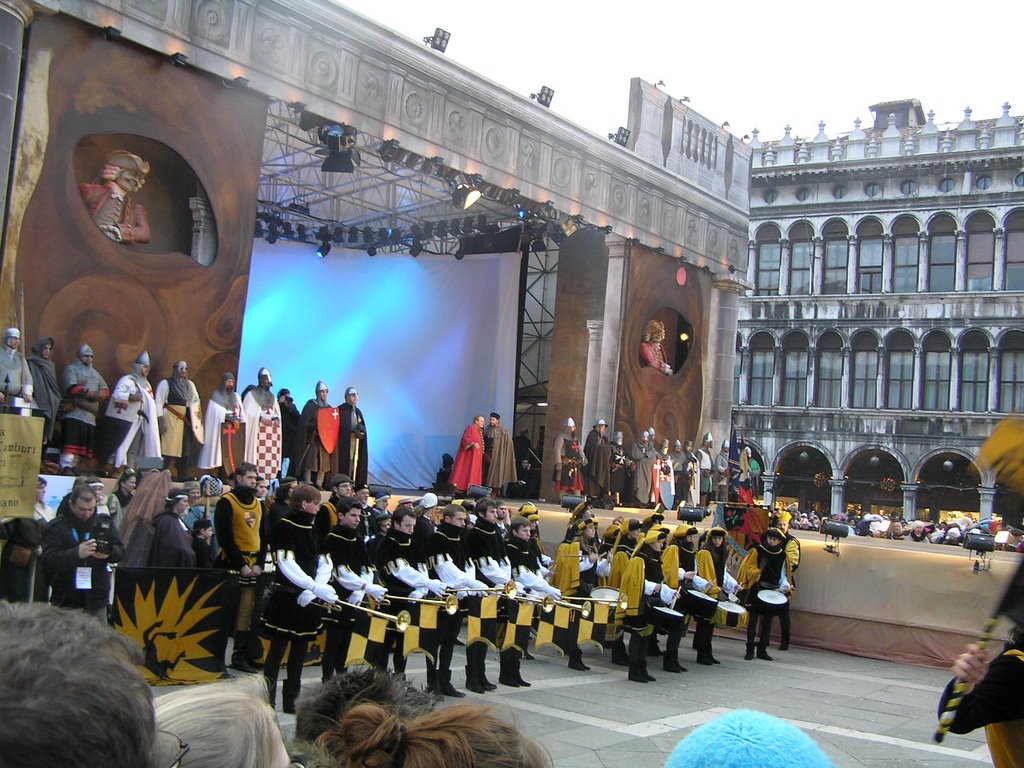 Imagine your city has a long history of certain activity that can be re-enacted and bring tons of tourists (read: profit) but some money is needed to organize the festival. Those elaborate costumes, artist performances and massive stage do not come for free. Since the cost of organizing the festival is much less than the benefit from tourist then wouldn’t each citizen of the city (assuming all will benefit, quite true in the case of Venice) will hurry to contribute right?
Wrong! The benefit of carnival is felt to all through higher sales of handicraft gallery, souvenir shop, restaurant, etc (which Venice are full of) but each is better of if a carnival is set up without they are paying for it. Why not let others pay and just sit down waiting for the tourists to come?
This is a classic case of public good where the voluntary free market will not provide the best solution since the money collected will be below the optimal level. A public good is a something that once already set up (ex: bridge) can not limit the use only for those who pay for it (hence, free rider). The free rider problem is so severe that even neo-classic school (the poster boy of economics) is admitting it, albeit putting the topic in obscure last pages used to be skip by lectures catching deadline on covering more “important” topics.
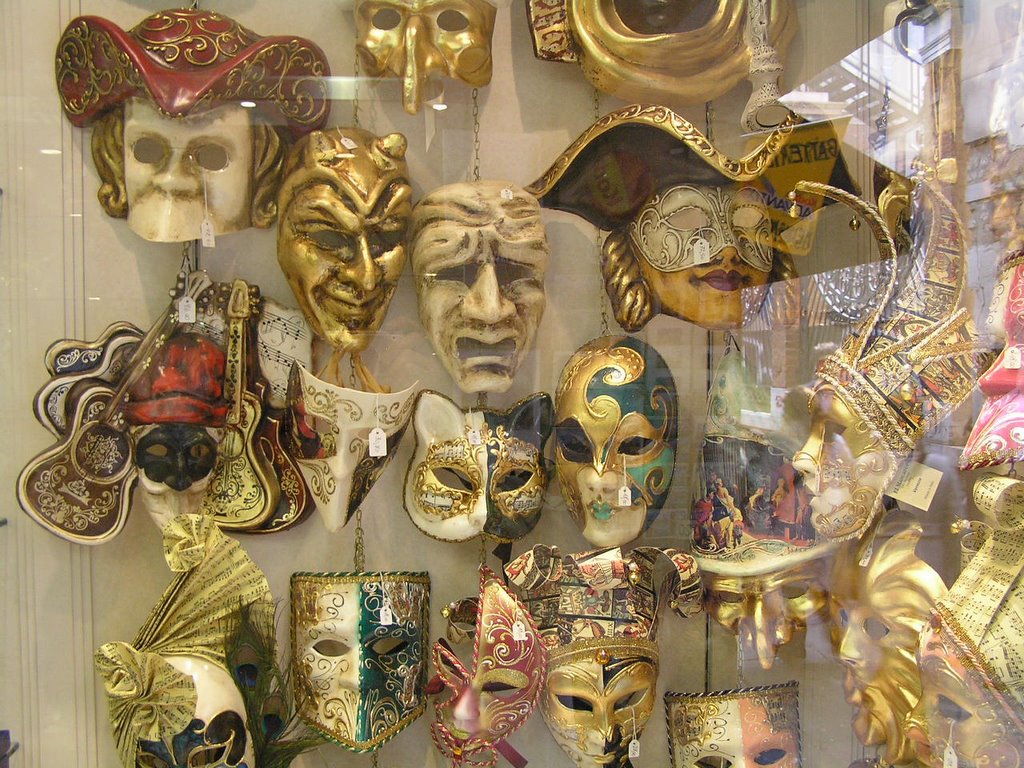
Here is a description from the official website
“The Carnival of Venice officially began in 1296, when the Senate of the Republic authorized the carnival with an edict declaring the day before Lent as a day of celebration. After a break of almost two centuries, the traditions of the carnival were recovered by the Municipality in 1980 and since then the event has been held with great success each year”
So, it takes a government to start it all. There is roughly two ways to deal with public good, either to make it totally private or totally public. The government (except when under occupation, Venice always been a republic with elected government) has the coercive power to issue taxes and gather the needed money to cover the cost of carnival. Mancur Olson (The Logic of Collective Action) and Amartya Sen (Hunger and Public Action) have pointed out the possible divergence between private and public actions long time a go.
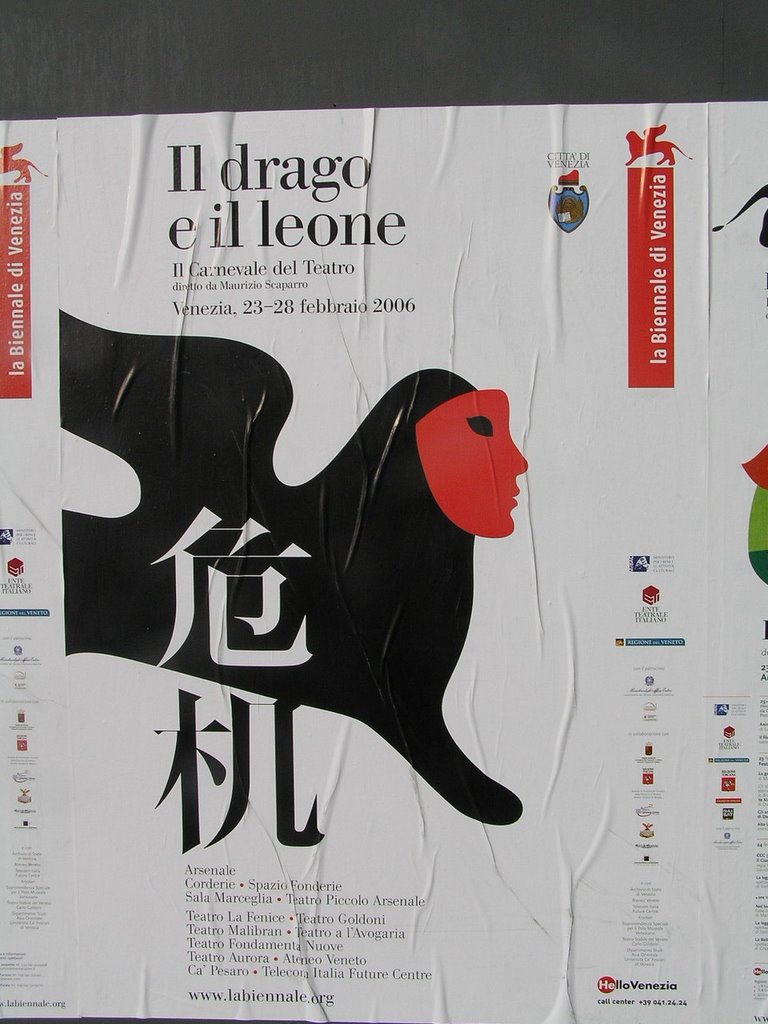 Another interesting feature of this carnival is the theme, which is “The Dragon and The Lion”. The Winged Lion is the symbol of Venice. The Dragon? You guess it right. It’s for China. Even a 710 years old tradition can not ignore the newly awakened economic power of middle kingdom.
Enjoy the weekend.. It’s carnival time… La dolce vita!
Subscribe to:
Posts (Atom)


