Tuesday, March 28, 2006

Let’s Go Glocal!

by Berly


I agree that the term “globalization” is probably the most overused, misused and abused term in the last ten years (“millennium” surpassed it briefly in 1999 though).

A derivative term is made by combining the centralizing force globalization with centripetal force of localization, resulting in a somewhat awkward “glocalization”. Wikipedia defines the term as “The creation of products or services intended for the global market, but customized to suit the local culture.” It also explained that the terms come from Japanese business practices and brought to English speaking world by a British sociologist named Roland Robertson in the 1990s.

A quick online search by Google revealed that the term has over 117000 hits. There is even a Conference on Glocalization that will conduct the fourth annual meeting this year. So, I guess we must accept that the term is here to stay.

The reason I go an extra mile to explain the origin of the term is simply that I want to describe glocalization at work in medieval city that I am living now.

If you pass Siena’s main street to Il Campo, you would not miss a neat and spacious modern supermarket like store own by Consorzio Agrario Siena (Agricultural Consortium of Siena), the windows has writing in English "Specialist Grocery Store - Typical Foods and Wines".

The majority of the products come directly from the local farm and most of the packed goods were packed up locally. You can find local fresh meat and wines together with more gastronomically palatable delicacies. Marmellata di mandarino (orange jam) taste great on any bread while funghi porcini (mushroom sauce) is suitable to almost any dish. Or you have a royal taste bud, then salsa tartulafa (black truffle) and ragu di capriolo (tomato sauce with and deer mince meet) is yours to taste.

Consorzio Agrario Siena is a farmer co-op that founded in 1901. Since then it has grown to provide various services from wheat grinding to specialty store, from agricultural technology consulting to gas station. It even has its own protein certification labs.

I have yet to study its history, membership and profit sharing method with it is very close to an ideal in term of production. It buys directly from farmer and sells directly to costumer. By cutting cost of unproductive middle man it can (and should) give more profit share to the farmers. Furthermore, the by obtaining the form of modern organization it can extend the reach beyond its borders. I am sure they also serve numerous specialty shops around Europe.

What does it take to bring it to other (especially developing) countries?

1. Heterogeneous products

The scheme would not work as well if they only sell olive oil and bread. The types of products need to be sufficiently numerous (beside few local specialty) to be able to command attention of customers.

2. Costumer taste

Designated customers need to develop a taste for “genuine” and “biologically friendly” products. After all, in term of production scale it is hard to compete with giants such as Nestle and Parmalat. Most likely that the price in CAS store’s can not be set to be lower than those giants. Customers need to have enough reasons for such a premium.

3. Modern organization

Having a vertical food processing company required modern management technique with high regard for efficiency. Family relationship should not be the main factor of employments. The need to obtain capital through banks or capital market also demands a professional and open organization.

4. Export oriented

The big money is out there in other countries. So are the customers with consciousness and willingness to pay. If local producer can tap those markets, it will greatly increased the sustainability of the co-op. After all, it is a natural next move for a glocalization phenomenon. The entire barrier to export and possible assistance to find global market from government is appreciated.

World need more glocalization! And while we are at a far flung part of the world looking for market access for a local producer, let also search for a better term for it.

Monday, March 27, 2006

Teriakan dari pelajar yang stress menghadapi ujian dan thesis...........

Dear guys,

Sorry for the late response from us. We are still in the middle of a hectic situation here. Some of us still dizzy with incoming exams, while others have to write some new and academically provoking idea of research questions. Therefore, we would like to share some of our "kusut-ness":D.


Monetary Economics :

1. Is it theoretically and empirically effective to have one currency for Indonesia under decentralization era?

fact :
"In Europe, in order to have a good and stabile one currency policy under different fiscal policies, there are some major consideration. Quite same fiscal deficits, slightly homogenous rate of inflation are some of main consideration"

2. Is it relevant to argue the ineffectiveness of the monetary policy in Indonesia

Fact :
"Theoretically, monetary policy is not effective under different specific shocks across regions. For instances, the tsunami catastrophy in Aceh Province , Social conflicts in Maluku and Papua, etc. All of these lead to different shocks, that implies to a different rate of inflation as ultimate monetary goal of central bank."

Development Economics :


We would expect that LDCs should have a better level of health in order to get a higher economic growth, thus, a faster rate of convergence. Unfortunately, under TRIPS agreement, poor country are forced to pay higher price for drugs. Is it fair for both developed and developing countries?


Industrial Organization :

1. Theoretical research of Cartel Stability seems to omit the existence of consumer behaviour in their analysis. Intuitively, we could see that the more searching the consumers are, the less stabile the cartel is. (The previous literatures on cartel stability argument implicitly -not explicitly !!!- assuming that the consumer search intensively (perfectly). Thus, consumers will react perfectly if there is a price changes of the good). Will cartel behave the same way if this perfect search assumption is relaxed? What is the optimal behaviour of the firm inside the cartel under the different (not perfect) search behaviour of the consumer?

2. The problem above will be more complicated if we include the Anti Trust (AA) Behaviour. If AA can detect the cartel existence differently, based on several characteristics (this is again a correction from the existence literature where most of them assume fixed probability of detection), then the cartel faced two big consideration: a. The behaviour of the consumer as mentioned in Question 1. b. The detection of the cartel from AA. How could we model cartel stabilility in this case?


Note : All questions have equal weights. You may consult your books. *Ujian mode : on !!! :P


Best Regards,


kami........

Thursday, March 23, 2006

Pemerintah Gagal Melindungi Petani

Kontroversi seputar impor beras kembali meruncing setelah pemerintah mengambil
keputusan impor beras. Kita mempertanyakan kelayakan pertanian, khususnya padi
di Indonesia. Ada dua faktor, yaitu kondisi pasar beras dunia dan perlindungan
sosial yang dibangun melalui good governace, membentuk cara pandang terhadap
masa depan padi di Indonesia.

Pertama, struktur pasar beras di level international dimana Indonesia adalah
salah satu negara pengonsumsi beras terbesar. Ekspansi beras sebagai makanan
pokok sangatlah kuat walaupun di beberapa wilayah di Indonesia Timur
masyarakatnya mengonsumsi umbi-umbian. Beras, secara sosiologis, kemudian
identik sebagai simbol kemakmuran.

Produksi padi Indonesia menyumbang 8,5% dari total produksi dunia. Pada saat
yang sama, impor beras kita menyumbang 13,5% dari produksi dunia. Bandingkan
dengan Bangladesh dengan kontribusi produksi sekitar 3,4% tetapi mengimpor 4,5%
dari total produksi dunia. Hal ini mengindikasikan kebutuhan pangan kita masih
berada dalam keadaan siaga. Jika produksi beras dunia tidak mencukupi, bencana
kekurangan pangan di dalam negeri bukan suatu kemustahilan.

Dalam konteks global, ketersediaan beras sesungguhnya lebih dari mencukupi,
yaitu 21,8 metrik ton (MT), sedangkan permintaan beras untuk impor hanya 8,5
MT. Berdasarkan hitungan di atas kertas, tidak ada masalah antara ketersediaan
beras dan permintaannya. Namun terlihat dalam perbandingan jumlah negara
pengekspor dan importir beras bahwa struktur pasar beras dunia sangat rentan.

Solusi Jangka Pendek
Amerika Serikat, Thailand, India, Vietnam, China dan Pakistan adalah 6 negara
pengekspor beras utama sedangkan negara importir lebih banyak yakni Uni Eropa,
Brasil, Iran, Saudi Arabia, Bangladesh, Federasi Rusia, China, Jepang, dan
Indonesia.

Oleh karena itu dalam keadaan misalnya bencana alam, perang saudara menimpa
salah satu negara pengekspor, kehadiran pemain impor baru akan mempengaruhi
ekspektasi harga internasional terhadap permintaan yang tiba-tiba ini. Alhasil,
harga beras akan melonjak tajam sehingga mudah diduga dampaknya terhadap
pemenuhan pangan nasional. Harganya akan naik dan menimbulkan krisis baru
akibat merosotnya cadangan devisa yang dipakai untuk impor.

Pada masa Orde Baru, beras digunakan sebagai alat stabilisasi sosial politik.
Disediakan dengan harga murah demi menekan kerawanan sosial di tingkat bawah.
Pada saat yang sama petani mendapat subsidi sebagai insentif berproduksi. Pasca
krisis ekonomi 1997, pemerintah mencabut berbagai macam subsidi yang berkaitan
dengan pertanian.

Lalu lembaga seperti Bulog yang awalnya berperan sebagai stabilisator, tidak
bisa berbuat banyak menghadapi harga beras yang berfluktuasi. Solusi yang
ditawarkan akhirnya lebih bersifat jangka pendek dan mengikuti mekanisme pasar,
yakni impor beras.

Impor sebagai solusi akhirnya menempatkan petani sebagai aktor yang paling
rentan. Ini bisa dipahami sebagai proses interaksi antarkomponen yang
menyebabkan manusia berada dalam keadaan terancam jiwanya. Dalam jangka panjang
interaksi ini membentuk berbagai tingkat kesiapan menghadapi bencana.

Wisner et.al.(2003) mendefinisikan komponen tersebut, yaitu kekuatan dan
ketahanan mata pencarian, kondisi dan kesejahteraan sosial, perlindungan diri
sendiri, perlindungan sosial dan tata pemerintah yang baik (good governance).

Pemerintah Gagal
Mata pencaharian merupakan perlindungan dasar yang dimiliki dalam skala rumah
tangga dan jangka pendek. Posisi petani masih sangat rawan terutama jika
terjadi perubahan kebijakan pemerintah. Perlindungan sosial adalah tanggung
jawab pemerintah karena mencakup skala yang lebih luas. Fakta di lapangan
menunjukkan pemerintah telah gagal memberikan perlindungan kepada petani.
Sebab, kebijakan impor beras sama saja dengan mematikan ruang gerak petani.

Sebagai syarat tercapainya perlindungan sosial tadi, dibutuhkan political will
dan pelaksanaan tata pemerintahan yang baik. Pada titik ini, belum ada kemauan
untuk sungguh-sungguh memperbaiki sektor pertanian. Kebijakan impor beras
benar-benar bertolak belakang dengan pencanangan program revitalisasi
pertanian, perikanan dan kehutanan.

Keterbukaan proses pengambilan keputusan merupakan suatu keharusan. Bulog dapat
dikatakan telah melakukan kebohongan publik menyangkut proses pengiriman beras
impor dari Saigon. Walaupun akhirnya pengiriman ini dibatalkan, hal ini
mengandung implikasi ada aktor kuat yang berideologi pasar sedang bermain-main
dengan nasib petani.

Dengan kata lain, celah-celah kelemahan institusi dalam mengatur pasar dapat
dimanfaatkan untuk memuluskan kerja sama demi mengeruk keuntungan pribadi. Masa
depan pertanian padi di Indonesia tetap relevan terutama dikaitkan dengan
konteks perubahan global. Ketersediaan stok di pasar internasional bukan
jaminan kebutuhan nasional terpenuhi.

Produksi beras dalam skala gobal ditentukan oleh banyak faktor yang sama sekali
di luar kendali kita. Yang mungkin dan mampu kita kendalikan adalah memperkuat
determinan ketersediaan beras dalam negeri. Ketimpangan akses terhadap lahan
dan persoalan alih fungsi lahan pertanian merupakan agenda panjang yang harus
dipecahkan bersama.

Daripada mengimpor beras, pemerintah lebih baik memperbaiki distribusi faktor
produksi, terutama tanah dan menata rel kebijakan agar sejalan dengan program
revitalisasi pertanian, untuk mensejahterakan petani.

=========
sebuah tulisan yang pernah dimuat di harian sinar harapan 22 des05

Thursday, March 16, 2006

A query from ‘not so green’ Norway

by Dewa

Before I visit and study in Norway, I was being well informed about how “green” Norway is. Friends said that there are a lot of environmental-analyst around the world studied and earned degree from various universities in this country. And in the first month I inhaled Norway’s air as well as the Norwegian approach of environmental economic course, most of that claimed has been proven undoubtedly.

From my point of view, the natural habit of each Norwegian has initially shown this “green” policy. For example, Norwegian have very systematic activities related with hunting animal management for both endanger animal and the usual one, or ‘kommune’ (community or district) based garbage and sewage systems, or attention on renewable energy such as water and wind energy resource. Particularly energy resources, the Norwegian have a strong will to utilize their nature for energy supplier in a friendly way as they ‘discount rate’ on environment inter-generational cost-benefit is quite low. In other words, they are willing to pay more of better environment quality now for future generation.

Meanwhile, that is not a whole perfect story. “Norway actually not so green at all”, that is what Aftenposten reported based on EEA (EU’s environmental agency) assessment. The article said that Norway unleases more carbon dioxide emissions per resident than the European average. Also, Norwegian consumed more energy per capita than the European as well. Although regarding the energy high consumption obviously it has been affected by extreme cold climate that requires a lot of energy to keep the population well.

The interesting part of this EEA’s reports is the report admitted that Norway somehow able to balance those high ‘abuse’ on environment and energy. For example, even though Norwegians generate and throw out more garbage on a per capita basis compare to their European counterparts but their recycling programs is one of the most efficient in Europe and even has more participation among citizen than European citizen counterpart. The same analogy also working for hydropower that supply high electricity consumption with a strict water (including river, rain, and snow related) management to maintain the production capacity as well as the natural conservation.

There are some other natural resource policy and management that apply in Norway. Why it seems that the ‘not so green’ Norway tried to find equilibrium between “to pollute and to conserve”? How actually to conduct such policies? What endowment needed to be able to succeed in this issue?

Since Norway is one of the riches countries, you might say that money is the key, don’t you? Fortunately, I saw that community based approach is the main key in this matter. Despite of ample of money support, the success of environmental policy in Norway is seen on individual/market active participation and local community involvement in designing the policy.

I am still wondering how this mechanism seems working well while in developing countries the “state versus market role” issues still dominating the argument. Why it is so damned hard to cooperate or combine those two parties in the third world??

Friday, March 03, 2006

The Market for Peace

by Berly


In a way, peace resememble market economy. To have a lasting peace, it need incentive to have opposing factions come together for a peace deal and stay in peace (so is love, but that’s for another post). There is a supply and demand for peace.

If benefit for peace is bigger for each group than the benefit of conflict, then peace prevail. The problem is on most conflict the benefit for peace is uncertain while the cost of stopping the conflict is certain (and what if the enemy attack after we un-armed and un-prepared?)

My article in Paras Indonesia (click here) discuss the impact of Nobel Peace Prize nomination for President Yudhoyono and former Finnish President Martti. I put the nomination as additional incentive that change the payoff for peace from government side. The institutional and political side of the Aceh Peace process was analzyed with game theoritical framework in my older article (click here).

So, should we change the slogan from “give peace a chance” to “give peace a nomination” ?

Tuesday, February 28, 2006

A Hat-trick for Globalization

by Berly

All the world is a football field,
And all the men and women merely players

Forgive my pun on that Shakespeare sonnet, but if you live in Italy football is everywhere. Even if those magnificent churches are empty on Sunday, the stadium and pubs are never empty when a game is on. Sunday night’s TV is full with football coverage and Monday morning in class in time to tease between supporters of different teams.

I came across an excellent essay by Branko Milanovic, an economist at the Carnegie Endowment for International Peace, entitled Learning Globalization From Football.

So, let us set to watch a football match between near-ideal globalization represented by football (F) and real world (RW) globalization.

In football the markets works since supply met their demand. A team can hire any player they like if they can pay the price and a player can look for team that suits its taste after the contract expire (one can even break the contract, for a price). No monopoly and price fixing. Compare that with real world oligopolistic business arrangement and trade restrictions.

The whistle is sounded and the game begins… the F team make a beautiful breakthrough and Inzaghi scored with high curve that elude the goal keeper. 1-0!

In football, there is no limitation of player mobility. All of Arsenal’s players are non-British nationals and the coach is French. Most of top European clubs employed non European in their team. And how does an African or Asian get spotted? Just play well in World Cup or regional cup and flood of offers will come. Meritocracy is at work here and eveyone has a chance. Compare with real world where it’s very difficult (especially for non western) to work across countries with all the licenses and legal limitations.

The keeper of RW is making illegal move and resulted in Penalty. Totti took the shoot and make a powerful curving banana. 2-0!

Remember when Senegal beat France in 2002 World Cup? A French friend of mine give excused that it’s actually French against French since most of Senegal team play on French league. In football, after learning to play with the best and in the toughest league the players will go back to play for their own countries in World Cup and Olympics. Thus, spreading their hard gained skills to their fellow countrymen and brings pride for their country. Similar arrangement need to be made in globalization where the ex-pat from developing countries can share their skill and network to their countrymen beside sending remittance to their immediate family.

Ibrahimovic and Del Piero bring the ball crossing defensive line and work toe-to-toe in order to face the lonely goal keeper. A soft touch by Ibrahimovic brings the score to 3-0! ... Long wistle is sounded and time is up.

If only the whole globalization is a football field…


Errata:
There are still 3 British citizens on current Arsenal team.

Saturday, February 25, 2006

Tragedy of The Commons: Downloading Movie

by Alief
Salah satu hal yang paling kami (Norway's Folks, saya+kak dewa) banggakan di student housing NULS adalah fasilitas internet 24 jam, 7 hari seminggu, 10 Mbps di kamar masing-masing. Semua jadi indah karena hampir semua bisa kita dapatkan di dunia maya ini. Dari mengunduh jurnal - jurnal yang dilanggan oleh kampus, sampai dengan tindakan - tindakan ilegal khas negara berkembang, mengunduh lagu, majalah dalam format pdf dan yang paling menyenangkan FILM baru. Pernah suatu masa kak Dewa dengan bangga bercerita, di kala Star Wars paling baru belum tayang perdana, dia sudah asyiknya menonton hasil mengunduh di internet. Saya rasakan kegembiraan itu juga akhirnya disini, semua film baru, sebut apa saja, mulai Harry Potter-Goblet of Fire, The Chronicles of Narnia, sampai terakhir Munich, kami tonton dengan kualitas DVD dengan cara yang sama.
Tentu, kami bayar sewa bulanan flat yang termasuk di dalamnya fasilitas internet tanpa batas ini. Dan sebagai orang timur yang suka berbagi kebahagiaan, kadang kala saya membagi informasi cara mengunduh ini kepada teman - teman flat satu gedung. Saya mengira informasi ini layak dibagi karena dia adalah public goods. Suatu kebodohan, karena saya baru menyadari bahwa informasi ini berada di posisi common goods.
Ekonom mengelompokkan barang berdasarkan sifat rivalry dan excludability (mungkin ada yang bisa menemukan padanan kata yang tepat di bahasa Indonesia?). Jika ia secara bersamaan rivalry dan excludability, ia adalah private goods. Jika ia bersamaan non rivalry dan non excludability dia jadi public goods (contoh:TNI, Polisi). Yang sumir diantaranya sedikit rumit: rivalry saja tapi non excludable disebut common goods (contoh: SDA), dan excludability saja-non rivalry disebut club goods (contoh: klub). Awam, seringkali club goods dan common goods dimasukkan ke dalam public goods.
Kembali ke cerita, informasi tentang film gratis ini mengundang banyak orang untuk ikut bergabung dan memaksimalkan konsumsi. Beban jaringan gedung makin lama makin besar, dan bulan ini jaringan harus putus beberapa kali karena overload. Ekonom percaya there is no free lunch, sesuatu yang nyaris gratis ternyata harus dibayar dalam bentuk lain, dalam hal ini jaringan yang putus dan, untuk saya pribadi, kesal luar biasa karena saya berasa jadi ekonom paling bodoh sedunia.
Namun pengalaman saya adalah hal kecil dibanding tragedi kemanusiaan dalam Tragedy of Easter Island yang mengilhami paper terkenal Tragedy of the Commons. Keterbatasan sumber daya alam, populasi yang meningkat, dan kesalahan memposisikan sumber daya alam dalam perekonomian membuat penduduk satu pulau punah setelah sebelumnya terjadi kanibalisme untuk bertahan hidup.
Ah, saya baru sadar arti mimpi saya beberapa hari ini. Ada orang tak henti - hentinya mentertawakan saya. Mungkin dia Thomas Robert Malthus...

The Political Economy of Venice Carnival

by Berly

My first knowledge about Venice was from Donal Duck comics from childhood time. It is suppose to be a place where a romantic couple (even though Daisy Duck could be annoying some times) leaving a masked carnival to get into a gondola slowly moving in the canals while listening to the gondolier (yes, it’s how they are called) singing o’ sole mio.

So it is quite a disappointment to visit Venice and find the gondolier are not singing (by the way, you’ll need 50 euro for a ride) and gondola is just an over-glorified canoe/getek.

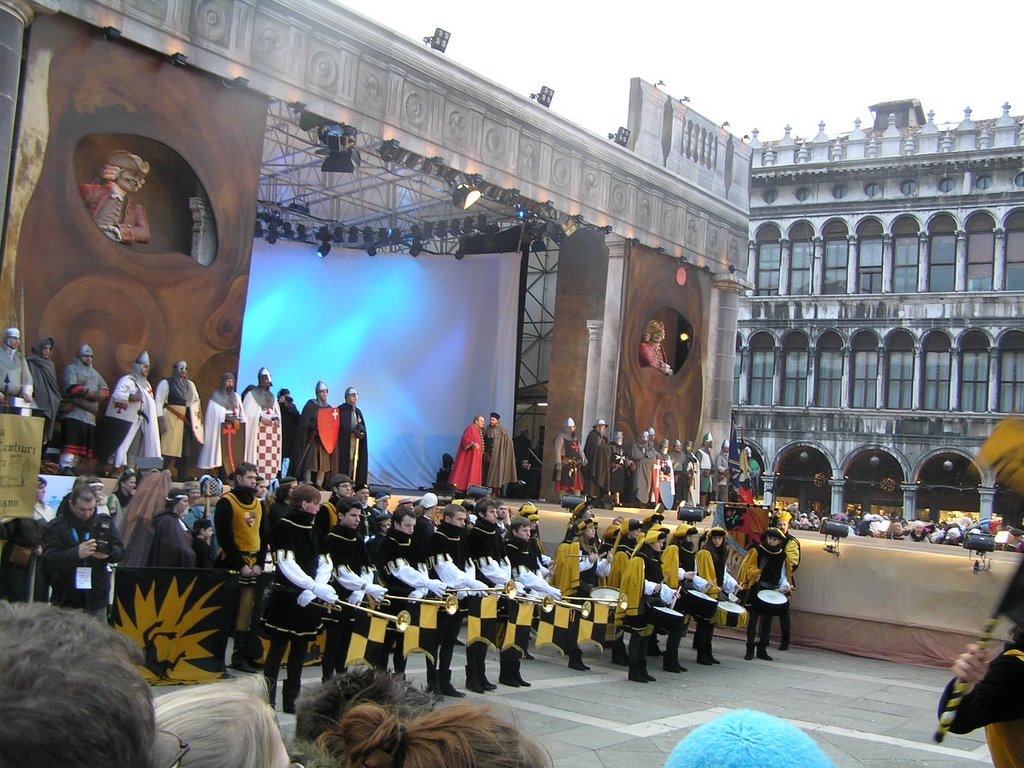
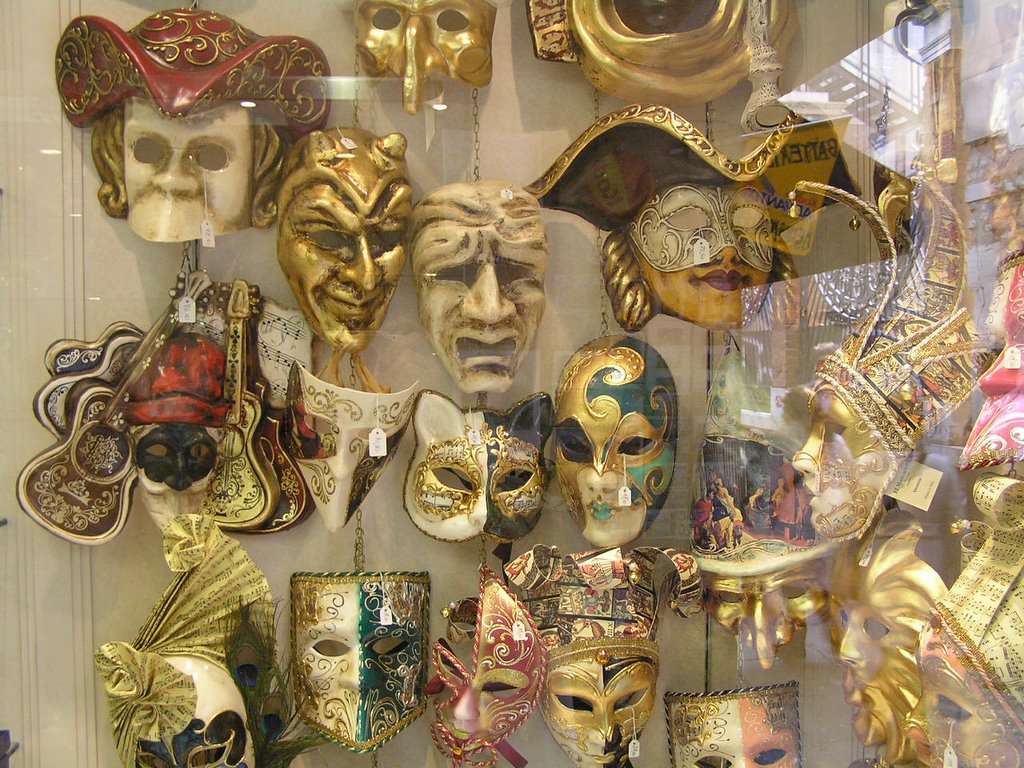
But the masked carnival is way underrated. Since my university organized a daytrip, I went there last week for the opening of the carnival.

Amidst all the captivating sights and hurly-burly of thousands of exuberance tourist, this extravagant carnival is a resulted from proper response to market failure.

Imagine your city has a long history of certain activity that can be re-enacted and bring tons of tourists (read: profit) but some money is needed to organize the festival. Those elaborate costumes, artist performances and massive stage do not come for free. Since the cost of organizing the festival is much less than the benefit from tourist then wouldn’t each citizen of the city (assuming all will benefit, quite true in the case of Venice) will hurry to contribute right?

Wrong! The benefit of carnival is felt to all through higher sales of handicraft gallery, souvenir shop, restaurant, etc (which Venice are full of) but each is better of if a carnival is set up without they are paying for it. Why not let others pay and just sit down waiting for the tourists to come?

This is a classic case of public good where the voluntary free market will not provide the best solution since the money collected will be below the optimal level. A public good is a something that once already set up (ex: bridge) can not limit the use only for those who pay for it (hence, free rider). The free rider problem is so severe that even neo-classic school (the poster boy of economics) is admitting it, albeit putting the topic in obscure last pages used to be skip by lectures catching deadline on covering more “important” topics.

Here is a description from the official website
“The Carnival of Venice officially began in 1296, when the Senate of the Republic authorized the carnival with an edict declaring the day before Lent as a day of celebration. After a break of almost two centuries, the traditions of the carnival were recovered by the Municipality in 1980 and since then the event has been held with great success each year”

So, it takes a government to start it all. There is roughly two ways to deal with public good, either to make it totally private or totally public. The government (except when under occupation, Venice always been a republic with elected government) has the coercive power to issue taxes and gather the needed money to cover the cost of carnival. Mancur Olson (The Logic of Collective Action) and Amartya Sen (Hunger and Public Action) have pointed out the possible divergence between private and public actions long time a go.

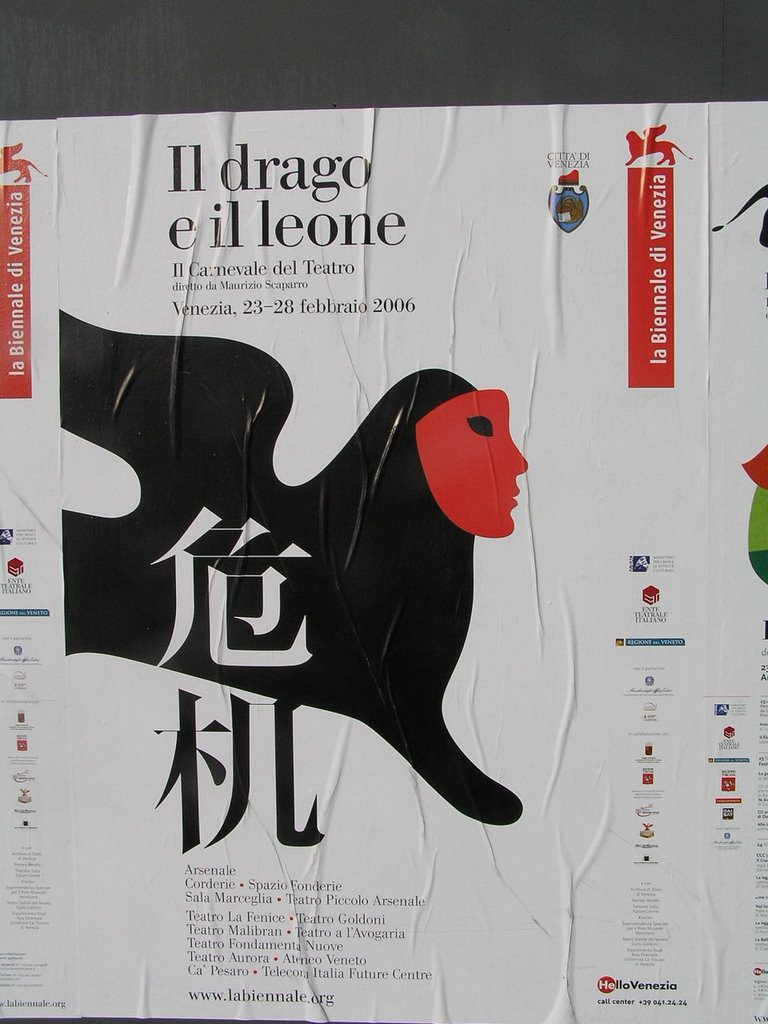
Another interesting feature of this carnival is the theme, which is “The Dragon and The Lion”. The Winged Lion is the symbol of Venice. The Dragon? You guess it right. It’s for China. Even a 710 years old tradition can not ignore the newly awakened economic power of middle kingdom.

Enjoy the weekend.. It’s carnival time… La dolce vita!

Thursday, February 16, 2006

Keset

Kantin FE Depok: a place for "ser-san" discussion of Depok cross continent generation. We served various foods and drinks of topics, with free 'musik kantin' and 'puisi air mancur', plus some garink-nomics stuff.

Just sit, eat and read...

"Keset!" (read: Welcome)